20年来親友だと思っていた人の本音を聞いてしまった

The first time I heard it, I was in the kitchen of Michał’s apartment, looking for a bottle opener. The door was half open. I wasn’t trying to listen. But the voice was so clear, so casual, that I stopped with my hand on the drawer handle.
“He’s so desperate to be liked,” Michał said. “It’s almost sad.”
His wife, Anna, laughed. Not a cruel laugh. Just a small, tired laugh. “And that wife of his. She thinks they’re better than us because they bought that house. It’s a box in the suburbs.”
I stood there. The drawer handle was cold. I remember that. Cold metal. I couldn’t move.
“He talks about his kids like they’re geniuses,” Michał went on. “The boy can barely read. I saw him last week. He just stared at the menu.”
“Maybe he’s shy,” Anna said.
“He’s slow. Like his father.”
I closed the drawer. Quietly. I didn’t want them to know I was there. I walked back to the living room and sat down on the sofa. My hands were shaking a little. I picked up a magazine and pretended to read.
Michał came in a minute later. “Found it?” he asked.
“No,” I said. “I’ll just have water.”
He shrugged. “Suit yourself.”
That was three weeks ago. I haven’t spoken to him since.
We had been friends for almost twenty years. We met at university. We were both studying economics. He was funny, sharp, a little cynical. I was quieter. We balanced each other. After graduation, we stayed in the same city. We were best men at each other’s weddings. Our wives became friends, or at least they pretended to be. Our children played together when they were small. We went on holidays together twice. We lent each other money. We knew each other’s secrets.
At least, I thought we did.
The day after I heard the conversation, Michał called me. I let it ring. He sent a text: “Everything okay? You left early last night.”
I didn’t reply. I didn’t know what to say. I kept thinking about the way he said “desperate to be liked.” The way Anna said “a box in the suburbs.” The way they both laughed.
My wife, Elena, noticed something was wrong. “You’re quiet,” she said.
“Just tired.”
She looked at me for a long moment. “Did something happen with Michał?”
“No.”
She didn’t believe me. She knows me too well. But she didn’t push. That’s one thing I’ve always appreciated about her. She gives me space.
A few days later, Michał called again. This time I answered.
“Hey,” he said. “You’ve been avoiding me.”
“I’ve been busy.”
“Too busy for a beer?”
“Yeah.”
There was a pause. “Did I do something?”
I wanted to say, “You know what you did.” But I didn’t. I just said, “No. I’m just busy.”
“Okay,” he said slowly. “Well, call me when you’re free.”
I didn’t call.
The strange thing is, I started to replay every memory. Every dinner, every party, every conversation. I started to wonder if he had always been laughing at me behind my back. The time I told him about my promotion, and he said, “That’s great, man,” but maybe he was thinking, “How did he get that?” The time I showed him the plans for our house, and he said, “Nice,” but maybe he was thinking, “What a boring little box.”
I started to doubt everything. Not just Michał. Everyone. My other friends. My colleagues. Even my family. If Michał could pretend for twenty years, who else was pretending?
Elena tried to talk to me again. “You’re not yourself,” she said.
“I’m fine.”
“You’re not. You’re angry all the time. You snap at the kids. You don’t sleep.”
I didn’t answer.
“Is it Michał?” she asked.
I looked at her. “Why do you keep asking about him?”
“Because you haven’t mentioned him in weeks. You used to talk about him all the time.”
I turned away. “People drift apart.”
“Not like this.”
She was right. But I couldn’t tell her. I was ashamed. Ashamed that I had been so blind. Ashamed that I had trusted someone who thought so little of me. Ashamed that I still cared what Michał thought.
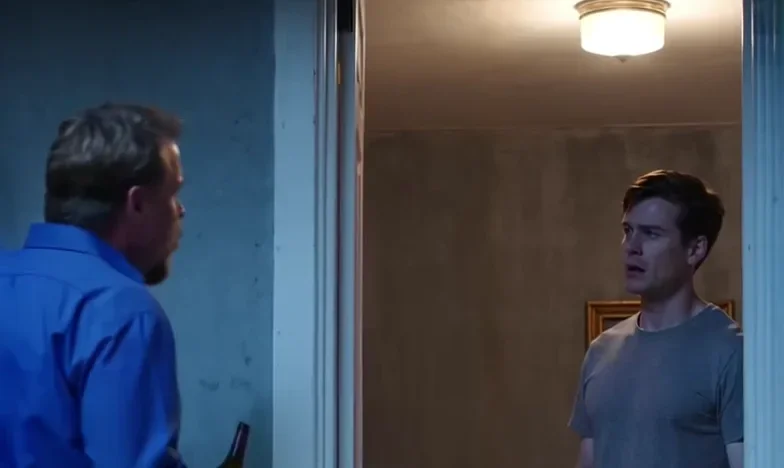
One evening, about two weeks after I heard the conversation, Michał showed up at my door. I was in the living room, watching television. The doorbell rang. I opened the door and there he was, standing on the step, holding a bottle of wine.
“Can I come in?” he asked.
I didn’t move.
“Look,” he said. “I don’t know what I did, but whatever it is, I’m sorry.”
I stared at him. “You don’t know what you did?”
“No. That’s why I’m here. To find out.”
I almost laughed. Almost. “You really don’t know?”
He shook his head. “I’ve been racking my brain. Did I say something? Did I forget something important? Just tell me.”
I looked at his face. He seemed genuinely confused. For a moment, I doubted myself. Maybe I had misheard. Maybe it wasn’t about me. Maybe it was about someone else.
But then I remembered the words. “He’s so desperate to be liked.” “That wife of his.” “The boy can barely read.” “He’s slow. Like his father.”
There was no one else it could have been.
“I heard you,” I said quietly.
“Heard what?”
“In your kitchen. Three weeks ago. You and Anna. You were talking about me and my family.”
His face changed. The confusion turned to something else. Fear, maybe. Or guilt.
“What did you hear?” he asked.
“Enough.”
He opened his mouth, then closed it. He looked down at the bottle of wine in his hand. “It wasn’t what you think.”
“What was it, then?”
He didn’t answer.
“You said I was desperate to be liked,” I said. “You said my wife thinks she’s better than you. You said my son is slow. Like his father.”
He winced. “I didn’t mean it.”
“Then why did you say it?”
“I don’t know. We were just talking. It was stupid. We were tired. We’d had a few drinks. I didn’t mean any of it.”
“You laughed,” I said. “Both of you.”
He shook his head. “It wasn’t like that.”
“Then what was it like?”
He didn’t have an answer.
We stood there for a long time. The night air was cool. I could hear a car passing somewhere in the distance.
“I’m sorry,” he said finally. “I’m so sorry. It was a terrible thing to say. I don’t know why I said it. I was an idiot.”
“Yes,” I said. “You were.”
“Can we talk about this? Please? Let me come in. Let me explain.”
I shook my head. “There’s nothing to explain.”
“We’ve been friends for twenty years,” he said. “You’re going to throw that away over one stupid conversation?”
“You threw it away,” I said. “Not me.”
He looked at me. For a second, I thought he was going to argue. But then he just nodded. “Okay,” he said. “I understand.”
He turned and walked away. I closed the door and leaned against it. My heart was pounding. I felt sick.
That was a week ago. He hasn’t called since. I haven’t called him either.
Elena knows something happened. She stopped asking. She just watches me sometimes, with a worried look. The kids don’t understand. They keep asking when we’re going to see Uncle Michał again. I tell them I don’t know.
The truth is, I don’t know if I did the right thing. Part of me thinks I overreacted. People say stupid things when they’re tired or drunk. They complain about their friends. It doesn’t mean they don’t care.
But another part of me can’t forget the casualness of it. The way he said “desperate to be liked.” The way Anna laughed. It wasn’t anger. It wasn’t frustration. It was contempt. And contempt is not something you can apologize away.
I keep thinking about all the years we spent together. The holidays. The late-night phone calls. The times he helped me move apartments. The times I helped him through his father’s death. All of it. Was any of it real?
I don’t know. Maybe it was. Maybe he did care about me, in his own way. Maybe he just had a moment of weakness. Maybe I should forgive him.
But I can’t. Every time I think about calling him, I hear his voice in my head. “He’s so desperate to be liked.” And I put the phone down.
I don’t know what happens now. Maybe we’ll never speak again. Maybe in a few months, I’ll feel differently. Maybe I’ll miss him enough to forget.
But I don’t think so.
Some things, once you hear them, you can’t unhear. Some words, once they’re spoken, change everything.
I used to think friendship was about trust. Now I think it’s about luck. You’re lucky if you never find out what your friends really think of you.
I wasn’t lucky.